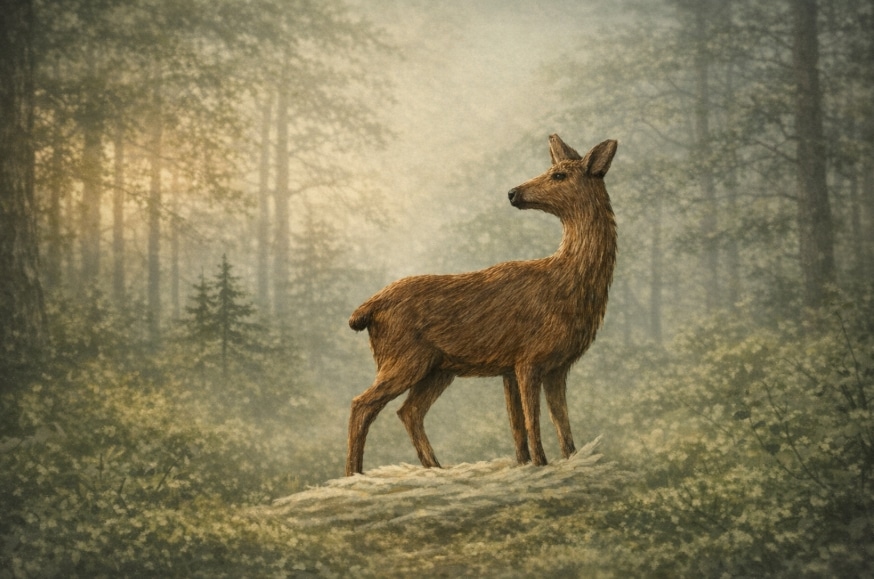
People often ask how a woodcarver creates a bird, deer, fish, or other wildlife carving from a simple block of wood. For me, the process begins long before the first cut is made. Years of carving have changed how I look at the world. When I see a bird sitting on a railing or a deer standing in a field, I naturally begin studying the shape and imagining how that form could be created from a block of wood.
Seeing Shapes Instead of Details
Many people notice an animal’s color, markings, or fine details first. As a woodcarver, I often notice the overall shape. The outline of the body, the position of the head, the angle of the tail, and the proportions of the form become my first points of focus.
Starting With a Block
When I begin a carving, I see the subject as a block of wood first. Whether the project is a crow, a chickadee, a dolphin, or a deer, I visualize how that shape will fit within the available wood. The challenge is not adding the animal to the block but revealing it from within the wood.
Finding the Basic Outline
One of the first things I look for is the basic outline. Before thinking about feathers, fur, scales, or texture, I want to understand the major shape. If the outline is correct, the carving already has a strong foundation.
The Importance of Side Profiles
When examining a bird or other subject, I often visualize the side profile first. The shape of the head, beak, back, breast, and tail helps establish the overall silhouette. Once the profile is clear in my mind, I can begin imagining how the wood must be shaped to create that form.
Why I Prefer Simple Patterns
When choosing carving patterns, I prefer designs that clearly show the basic outline. Some patterns contain so much detail that the primary shape becomes difficult to see. For me, a good pattern begins with a clean silhouette and major forms. Details can always be added later.
Seeing Wildlife Through a Carver’s Eyes
Over time, carving has influenced how I observe the world. A bird on a deck railing, a deer in a field, or even a sea creature in a photograph becomes a study of shape and form. My mind naturally considers how the subject could be simplified into a block of wood and gradually revealed through carving.
Details Come Later
Beginners often focus on eyes, feathers, fur, and texture. While these details are important, they come much later in the carving process. Establishing the overall shape and major forms first creates a stronger foundation for the finished piece.
Conclusion
For me, woodcarving begins with observation. Before the knife touches the wood, the carving already starts to take shape in the mind. Years of studying wildlife and carving have taught me to look beyond surface details and focus on form. Every carving begins as a simple block of wood, and within that block waits the shape that is ready to emerge.
Kenneth Young
Leave a Reply